
Many hawk species patrol the skies over North America, subsisting mostly on rodents, insects and a few small birds. Most of the largest hawks in the world belong to the Buteo genus (Latin for buzzard) and are often, as a group, referred to as buteos. Four species of these bulky, impressive birds live in the Mid-Columbia Basin for at least a few months of the year.
Archived Artwork



Hawks
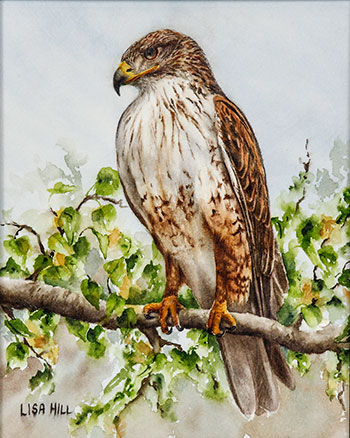
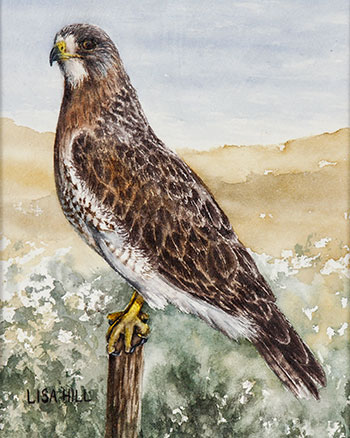
Ferruginous Hawk
The largest buteo in the world with a massive head and a wingspan of nearly 5 feet. It migrates north from the southern U.S. and Mexico to nest in our area, but the entire population is in serious decline from loss of habitat, primarily open, dry land. Ferrruginous refers to the rust-colored feathers on the wings and legs.
SOLD ©2015
from a photo by Larry Umthun
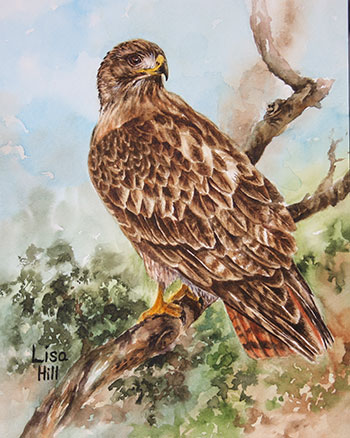
Swainson's Hawk
Nests in our area and migrates in huge flocks to southern South America for winter. These flocks are often seen sitting in open fields. Unlike most other buteos, the Swainson's eats mostly large insects rather than rodents.
SOLD ©2015
from a photo by Larry Umthun
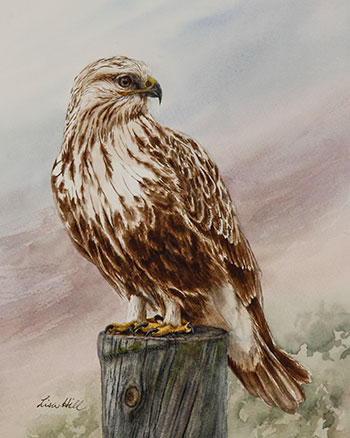
Rough-legged Hawk
So named because of the dense feathering on the legs. Nesting far north in the Canadian and Arctic tundra, this bird winters on the U.S mainland. A magnificent bird that is not hard to find in our area in winter.
SOLD ©2015
from a photo by Larry Umthun
Red-tailed Hawk
A year-around resident here, often perched on street lights overlooking the freeway. This bird has the most variable plumage of all the hawks. Some do not even have a "red" tail.
SOLD ©2015
from a photo by Larry Umthun
Scroll down for other hawks.
All content copyrighted
© 2008 - 2023 by Lisa Hill


